
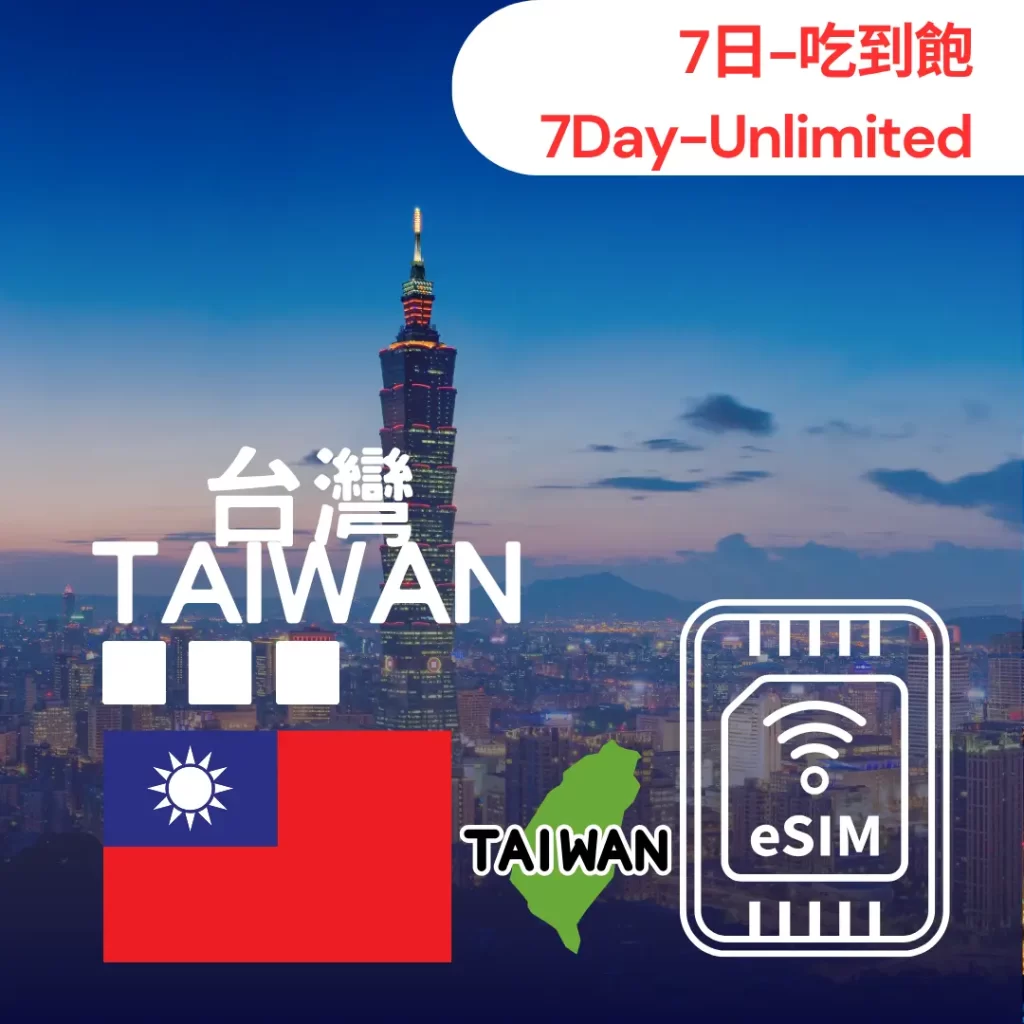
We are an authentic Taiwanese brand. DiTrip eSIM is a travel connectivity solution specially designed for travelers visiting Taiwan. Every eSIM plan we offer has been personally tested by our team to ensure reliable performance during your trip.
We live and work in Taiwan, which means we understand Taiwan’s eSIM network conditions and travel information better than anyone. As a local brand, DiTrip is committed to helping travelers stay connected with confidence.
In this article, we’ll share which eSIM plans are the most suitable for traveling in Taiwan. Since every traveler has different needs and usage habits, we provide the best recommendations based on different travel styles and internet usage requirements.
Best Taiwan eSIM Seamless Integration: Beyond the Physical SIM Card
The transition from physical plastic to digital profiles represents a significant leap in travel efficiency. By utilizing comprehensive resources such as the “eSIM Installation Tutorial” and the dedicated “My eSIM” management portal, travelers can now bypass traditional airport bottlenecks entirely.
Takeaway: Travel preparation has moved from the airport floor to the smartphone screen.
This digital shift eliminates the precarious “SIM card swap”—that anxiety-inducing moment of trying to keep track of a microscopic piece of plastic while balancing luggage and documents. Beyond the physical convenience, the “My eSIM” feature provides a sophisticated level of control, allowing users to monitor their connection status and data usage in real-time. By managing the connection through a digital portal, the risk of loss is negated, and the process of going online becomes entirely software-driven.
“Best Taiwan eSIM for travelers.”
Best Taiwan eSIM the 5G Standard: Why Local Partnerships Matter
A critical factor in travel connectivity is the quality of the local network. A deep dive into DiTrip’s offerings reveals a significant competitive advantage: every single plan is powered by Chunghwa Telecom’s 5G High-Speed Data.
Takeaway: Direct access to the primary carrier outclasses secondary roaming partners.
While many roaming solutions rely on secondary networks that suffer from deprioritization, these plans provide a direct link to Taiwan’s premier telecommunications provider. For the digital nomad, the most impressive detail is that 5G isn’t an “upgraded” tier; it is the absolute baseline. Whether you are opting for a minimal data package or a month-long unlimited plan, the speed of the connection remains uncompromised. This ensures that high-definition mapping, video conferencing, and tethering remain seamless, regardless of your budget.
Ultra-Short to Long-Stay: The Spectrum of Flexibility
The modern traveler is not a monolith, and data needs vary wildly based on the length of stay and professional requirements. The current offerings range from 3-day “weekend warrior” plans to 30-day “deep-dive” explorer packages.
Takeaway: A tailored plan exists for every traveler profile, from weekenders to digital nomads.
The granularity of these options—offering specific caps of 5GB, 10GB, or 20GB alongside unlimited tiers—allows for precise financial planning. A keen eye for value reveals an interesting crossroads at the $19 price point: a traveler can choose between 5 days of “Unlimited” 5G data for a high-intensity short trip or a 30-day “10GB” plan for a month of moderate use. This flexibility ensures you are paying for actual utility rather than a one-size-fits-all approximation.
The “Unlimited” Advantage: Pricing the Peace of Mind
When evaluating the cost-to-benefit ratio, the “Unlimited” data plans present a compelling case for heavy users who don’t want to count megabytes. The pricing starts at a lean $13 for a 3-day stint and reaches $69 for a full 30 days of unrestricted 5G access.
Takeaway: Mid-range unlimited plans offer the highest utility-to-cost ratio.
The 5-day unlimited plan, priced at $19, stands out as a particularly high-value option for the average vacationer. For those relying on real-time translation apps and high-resolution maps, “Unlimited” provides a psychological buffer. When paired with the “My eSIM” portal to verify active service, it removes the need for constant data monitoring, allowing the technology to fade into the background so the travel experience can remain the focus.
Pre-Flight Due Diligence: The Compatibility Check
Despite the ease of eSIM technology, the most critical step occurs before the transaction is finalized. The support infrastructure provided by DiTrip includes extensive resources for device verification, ensuring that the transition is foolproof.
Takeaway: Successful connectivity begins with the pre-purchase compatibility audit.
The availability of device-specific tutorials for both iOS and Android users lowers the barrier to entry for non-technical travelers. Furthermore, the inclusion of an “Order Inquiry” system and a robust “FAQs” section reinforces a professional support structure that goes beyond a simple digital transaction. By confirming device compatibility and reviewing installation steps ahead of time, travelers ensure that their 5G connection is ready to activate the moment the plane’s wheels touch the tarmac in Taipei.
Conclusion: The New Travel Essential
The eSIM is fundamentally reshaping the “first hour” experience in new countries. By moving the procurement and installation process to the pre-departure phase, travelers regain control over their time and digital security. It is perhaps fitting that Taiwan—a global titan of hardware and semiconductor innovation—is the perfect theater to witness this transition.
As we look toward the future of global travel, one has to wonder: how much longer will the physical SIM card kiosk even have a place in the modern airport? For now, the freedom of immediate, high-speed 5G connectivity upon landing in Taiwan has set a new standard, proving that in the digital age, the best way to start a journey is to be connected before you arrive.