
Jiufen is a paradox of verticality and volume. Built into a jagged cliffside in northeastern Taiwan, it is a town of narrow staircases and stone alleys that somehow accommodates five million visitors a year despite having no train station of its own. To reach it, the savvy traveler must navigate a transfer at Ruifang Station before ascending winding mountain roads where the Pacific spreads out below like crumpled grey silk. For most, the first impression is the “commercial spine” of Jishan Street—a slow-moving river of glowing screens and tour groups. Yet, for those who listen for the soft huff of the wind off the mountain or the slow scrape of slippers on tile, a more intelligent, layered reality exists beneath the tourist mask.
1. The Miyazaki Myth: Why the Legend is Better Than the Truth
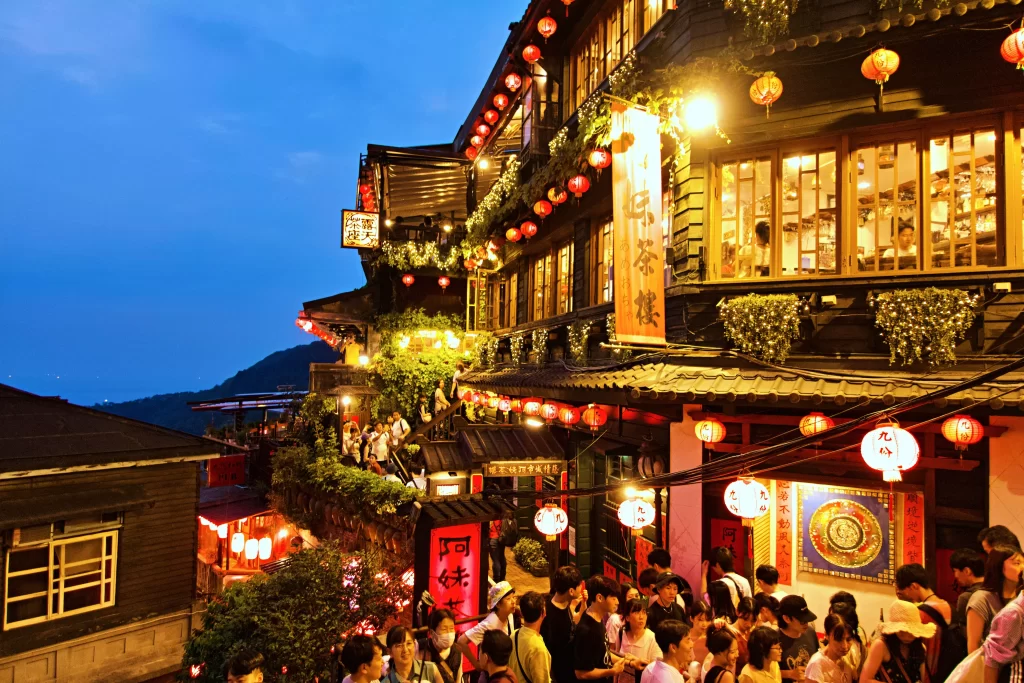
The global obsession with Jiufen is largely built on a profitable fiction. Almost every visitor arrives convinced that the lantern-draped A-Mei Tea House served as the primary inspiration for the bathhouse in Hayao Miyazaki’s 2001 masterpiece, Spirited Away.
In a triumph of economic pragmatism over historical accuracy, the town has leaned entirely into the myth. In reality, Hayao Miyazaki and his art director, Yōji Takeshige, have explicitly denied the connection. Miyazaki has pointed to the Dōgo Onsen in Shikoku and the Edo-Tokyo Open Air Architectural Museum as his true muses. However, Jiufen’s merchants recognized early on that a magical association is more lucrative than the town’s actual history as a Japanese-era gold mining outpost. Today, No-Face figurines and Studio Ghibli souvenirs are woven into the local fabric. At the Soga Soga mochi stand, the shopkeeper reflects the local sentiment:
“If they leave happy, who am I to fight Studio Ghibli?”
2. The “Plum-Rain” Paradox: Why You Should Pray for a Downpour
If the Miyazaki myth provides the town’s artificial light, the “Meiyu” (plum-rain) season provides its authentic shadow. While most travelers avoid mid-May to mid-June, this is arguably the smartest window for a visit. The rain acts as a natural filter; it thins the tour-bus crowds and forces the early lighting of the iconic red lanterns, which cast a crimson glow across the slick, wet stones.
In the mist, Jiufen transforms into a painted scroll. The soundscape shifts from the roar of the crowds to the specific sensory details of a mountain retreat: the drip of water off eaves and the “small sound” of hot oolong tea being poured into porcelain. The heavy humidity wraps the town in a hazy veil that captures its inherent nostalgia far more effectively than a sunny day. In the rain, the commercialism recedes, and the town’s original identity as a lonely, wind-swept cliffside village returns.
3. The Texture Obsession: When Bland is Actually Better
To the culinary anthropologist, Jiufen’s food stalls offer a masterclass in the Taiwanese obsession with “Q”—a prized culinary trait referring to a bouncy, springy, or elastic mouthfeel. While global palates often prioritize bold seasoning, Jiufen’s most famous treats prioritize the “Q-texture.”
At legendary establishments like Grandma Lai’s (Lai Ah Po) or Ah Gan, the signature taro and sweet potato balls are famously subtle. One local description captures the essence: “The balls are fairly bland, but it’s all about the chewy texture.” This obsession extends to the Red Yeast Meatball Dumplings at Jin Zhi, where the draw is the gelatinous rice casing and the tender pork soaked in red yeast (vinasse).
Even the “stinky reality” of the town is found in its food. At Shi Mi Dian, the “First Stinky Tofu” shop, the pungent aroma—an acquired taste for many—is as much a part of the sensory landscape as the taro balls. Whether it’s the crunch of deep-fried tofu or the oozy surprise of a sweet potato puff from Misty Cake, the Jiufen palate is a playground of texture over taste.
4. The “Hidden” Gold: Why Most Tourists Stop One Ridge Too Early
The commercial spine of Jishan Street often distracts travelers from the region’s true historical weight. Just one ridge over lies Jinguashi, the site of the Gold Museum and the original mining heart of the area. While Jiufen was the brothel-and-cinema hub of the gold rush, Jinguashi provides the “Indiana Jones-style” ruins that contextualize the boom.
The neighboring landscape is home to the Shuinandong Smelter, also known as the “Remains of the 13 Levels.” This abandoned art-deco smelter, terraced into the mountain, resembles a Roman amphitheater being reclaimed by the jungle. At the museum itself, visitors can touch a 220kg gold bar—once the largest in the world. These sites offer the sweeping panoramas and historical silence that Jiufen’s crowded alleys often lack, reminding visitors that this “theme park” was once a gritty, industrial frontier.
5. The Midnight Metamorphosis: The Ghost Town After 6 PM
The most dramatic transformation occurs at 6:00 PM when the last major buses depart for Taipei. The “theme park” atmosphere vanishes, and the town undergoes a midnight metamorphosis, revealing an honest, unvarnished reality.
Staying overnight is the only way to see Jiufen “breathe” without its tourist mask. In the quiet, narrow lanes, you will see the “ugly” but honest side of a mountainside village—the influx of cockroaches scuttling across dark stone steps. Far from being a deterrent, this is proof of a living environment rather than a curated set. The ultimate reward is the 5:30 AM sunrise walk. With the lanterns still lit and the streets completely empty, you can experience the town’s haunting beauty in total silence before the first bus returns at 8:00 AM to restart the cycle.
The Tea Remains Where You Left It
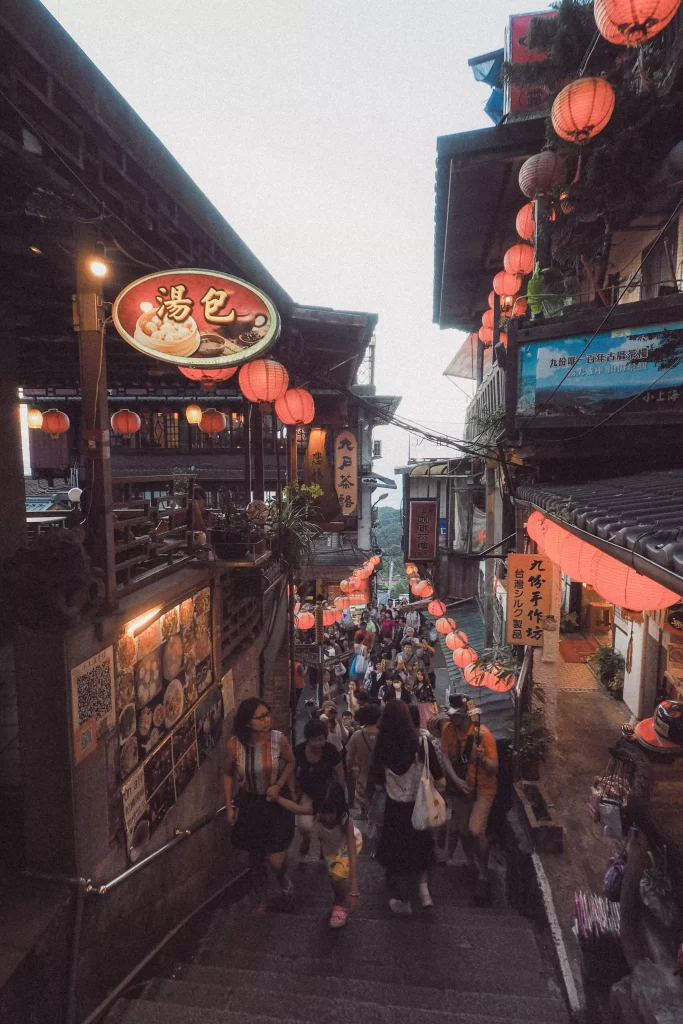
Jiufen is a town composed of layers: 19th-century gold, mid-century ghosts, and modern commercial myth. It is a place where you can find world-class oolong, 220-kilogram gold bars, and textures that challenge the global palate.
In a world of perfectly curated travel photos, are we brave enough to visit a town not for its famous “inspirations,” but for its quiet, rainy, and slightly “stinky” reality? The lanterns will remain lit, the mist will continue to roll in, and the tea will be exactly where you left it.